

WeConnectPatients.com
Clinical trials have a reputation problem. Let’s fix that.
Most of what people know about clinical trials isn’t wrong — it’s incomplete. Here’s the full picture, without the jargon.
Understanding Clinical Trials
A clinical trial is a research study.
Every medicine you have ever taken — the ones on your shelf right now, the ones your doctor prescribes without a second thought — went through clinical trials before it was approved. There is no modern medicine without them.
A clinical trial tests whether a new treatment, or a new use of an existing treatment, is safe, effective, or both. It is a carefully designed study — with oversight, protocols, and participant protections — not an experiment conducted casually.
Trials are organized in phases. Each phase asks and answers different questions. Together, they build the evidence base that regulatory agencies require before any treatment reaches patients.
Patient Stories
Stories of Hope & Discovery
Hear from people who have been through it — and decided to take part.
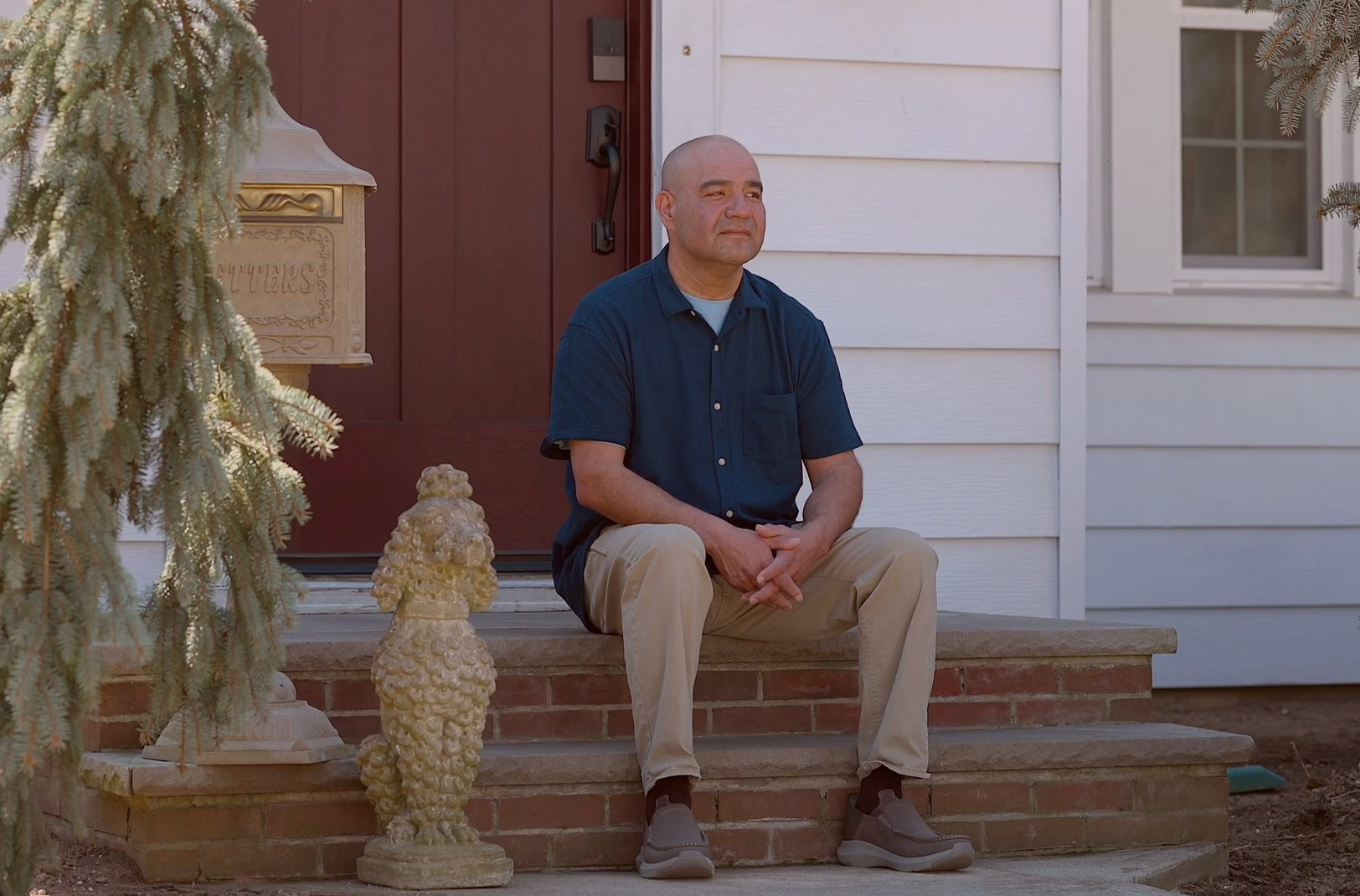
They took the step. This is what they experienced.
“Communicating with transparency and setting expectations are key to building trust with patients... After all, clinical research is here for the good of all people.”
— Monica Merino-Lopez
Read More: Diversifying psoriasis trials to expand clinical knowledge
What happens in each phase.
Clinical trials don’t skip steps. Each phase builds on the one before it.
Phase 1
Is it safe?
A small group of participants — often 20 to 80 people, though the number varies significantly by trial type and design. The focus is on safety: how the body processes the treatment, what side effects occur at different doses, and what dose is tolerable. In trials for serious or complex conditions, Phase 1 participants are often people who have not responded to existing treatments. In some areas — including vaccine development — Phase 1 trials may enroll healthy volunteers with no prior treatment history.
Phase 2
Does it work?
A larger group — often 100 to 300 or more participants, depending on the condition and research questions. The focus shifts to effectiveness: does the treatment do what it’s designed to do? Side effects continue to be monitored. Phase 2 trials give researchers a clearer picture of how a treatment behaves in a broader population.
Phase 3
How well does it work?
Large-scale trials, often involving 1,000 or more participants across multiple sites. The exact number depends on the condition being studied and the evidence threshold required for regulatory approval. The new treatment is compared to the current standard of care or, in some cases, a placebo. Phase 3 trials generate the evidence that regulatory agencies require for approval. This is typically the longest and most rigorous phase.
Phase 4
What happens long-term?
Conducted after a treatment is approved and in use. Monitors long-term safety, real-world effectiveness, and how the treatment performs in the broader patient population — including groups who may not have been well-represented in earlier phases.
Your rights as a trial participant.
These protections are defined by law and ethical guidelines — not presented as reassurances, but as actual requirements governing how trials are conducted.
The right to know.
Before you agree to anything, you will receive a document called an informed consent form. It explains the trial in plain language: what it’s studying, what participation involves, what the risks and potential benefits are, and what your alternatives are. You have the right to read it, ask questions about it, and take time before signing.
The right to ask questions — and get answers.
At any point during a trial, you have the right to ask the research team questions. About the treatment, the protocol, the data, your results. If your questions are not being answered, that matters. You have the right to raise it.
The right to leave.
You can withdraw from a clinical trial at any time, for any reason, without any consequence to your ongoing medical care. A researcher cannot penalize or pressure you for leaving a study.
The right to privacy.
Your personal and medical information is protected by federal law and by the privacy policies of the institution conducting the research. The data collected about you is used for research purposes only.
The right to safety monitoring.
Every clinical trial has an independent safety oversight process. If emerging data suggests a participant is being harmed, the trial can be paused or stopped. You don’t have to wait to see how it goes.
Things people believe about clinical trials that aren’t accurate.
Some of these misconceptions are decades old. Some of them come from real events in the history of medical research that we don’t minimize. But the research landscape has changed fundamentally — and the details matter.
"I’d be a guinea pig."
Trial participants are protected by a framework of ethical and regulatory requirements — informed consent, Institutional Review Board (IRB) oversight (or equivalent ethics review body outside the U.S.), safety monitoring, and the right to leave at any time — that simply did not exist in earlier eras of medical research. The abuses of the past were real. The regulatory response to those abuses was also real. Modern clinical trials are structured around participant protection as a baseline requirement, not an afterthought.
"Clinical trials are a last resort."
People participate in clinical trials at every stage of their health journey. Many trials specifically seek participants who are earlier in their disease course — who haven’t yet tried the treatments the trial might replace. “Last resort” thinking excludes the people trials often need most.
"The placebo group gets nothing."
In trials for serious conditions where an established standard of care exists, placebo-only designs are generally not considered ethically appropriate. Most placebo-controlled trials in these areas give all participants at least the current standard of care, with one group also receiving the investigational treatment. When no established treatment exists — which is the case in some rare or newly recognized conditions — placebo-controlled designs may be used, and you will be informed of this before you consent. You will not be surprised.
"Clinical trials are only for people who are very sick."
Eligibility varies enormously by trial. Many studies need participants who are managing their condition with current treatments — to compare against new options. Some need people who are newly diagnosed. Some need people who are currently well. Assuming you don’t qualify is a reason to check, not a reason to stop.
"I don’t have time for this."
Trial designs have changed. Remote participation, decentralized trials, and home-based visits are increasingly common — particularly since 2020. For patients with mobility limitations or chronic fatigue, these options can remove a barrier that once made participation feel impossible. Many trials now offer flexible visit schedules and, in some cases, reimbursement for travel or other participation-related costs. If time, transportation, or childcare is a concern, it is worth asking a study coordinator directly — the answer may be different than you expect. Many trials are designed around participants’ lives, not the reverse.
See what Takeda has open for your condition.
WeConnect matches your health profile to Takeda’s open clinical trials. Registration takes about 10 minutes.
About Takeda
About Takeda’s clinical trials.
Takeda conducts clinical research across oncology, rare diseases, neuroscience, gastroenterology, plasma-derived therapies, and vaccines. The company operates trials globally, across dozens of active conditions.
Takeda’s trials follow the same regulatory requirements as all clinical research — including FDA oversight, Institutional Review Board (IRB) review (or equivalent ethics review body outside the U.S.), and GCP (Good Clinical Practice) standards, the international framework for ethical clinical research.
WeConnect is Takeda’s registry for connecting patients to these trials. When you register, your profile is matched against Takeda’s portfolio specifically. If you’re interested in trials from other sponsors, ClinicalTrials.gov is the most comprehensive public database.
Ready to see what’s out there for you?
Registering with WeConnect doesn’t commit you to anything. It puts your profile in our system, and we reach out if something looks relevant. You decide what happens next.
Have more questions? See the full FAQ